
- Call us now: 01634 260 631


Construction remains one of the UK’s highest-risk industries, with falls from height, unsafe access, poor supervision and inadequate risk management continuing to result in serious injuries, fatalities and substantial fines.
The Health and Safety Executive (HSE) regularly prosecutes construction companies that fail to protect workers, with fines ranging from thousands to hundreds of thousands of pounds. Beyond the financial penalties, businesses also face reputational damage, project delays and increased insurance costs.
Health & safety failures don’t just result in paperwork and enforcement notices. They can lead to life-changing injuries for workers and significant financial penalties for employers.
Recent HSE prosecutions highlight just how costly poor planning, inadequate supervision and unsafe working practices can be.
In May 2026, a Manchester-based construction company was fined after a joiner suffered a complete spinal cord injury when he fell through an unsecured skylight opening while carrying out roof work on a domestic property in Altrincham. The HSE investigation found the principal contractor had failed to properly plan, manage and monitor the work, and suitable measures were not in place to prevent falls from height. The company was fined £8,000, ordered to pay £5,850 in costs and a £2,000 victim surcharge.
Key lesson: Falls from height remain one of the biggest causes of fatalities and life-changing injuries in construction. Proper planning, supervision and work-at-height training are essential.
A Liverpool fencing contractor was fined after an employee suffered electric shock injuries and burns when he struck a live underground electrical cable while carrying out excavation work on a construction site in Manchester. The HSE investigation found the company had failed to identify underground services before work commenced. The contractor was fined £10,000 and ordered to pay £5,487 in costs.
Key lesson: Before any excavation work takes place, businesses must identify and assess underground services and ensure suitable control measures are in place.
In March 2026, a construction company was fined £42,200 after the death of a teenage labourer. HSE found failures relating to work at height planning, supervision and competence management. The company was also ordered to pay costs and a surcharge.
Key lesson: Work at height activities must be properly planned, supervised and carried out by competent people using suitable equipment.
A roofing company was prosecuted after a worker fell through an unguarded loft hatch and suffered serious injuries including a fractured vertebra and hip. HSE found the company had failed to plan the work adequately and provide competent supervision.
Key lesson: Openings, fragile surfaces and work at height hazards must be identified and protected before work begins.

Here are five common reasons construction companies receive HSE fines — and what you can do to avoid becoming the next headline.
Falls from height remain one of the leading causes of fatal and major injuries in construction. HSE prosecutions frequently involve workers falling through roof openings, stairwells, fragile surfaces or from scaffolding and ladders.
Recent examples include:
A construction company fined £60,000 after a worker fell through an unprotected floor opening.
A contractor fined after a worker suffered life-changing injuries following a fall from scaffolding.
A construction company prosecuted after a worker fell through an unprotected stairwell opening.
✔ Properly plan all work at height
✔ Use suitable edge protection and fall prevention systems
✔ Ensure scaffolds are inspected and maintained
✔ Train workers in safe working at height practices
✔ Carry out regular site inspections
Relevant Training:
Working at Height Awareness
Our sister company MCL Height Safety can provide comprehensive Work at Height training
Many HSE investigations identify a lack of competent supervision as a contributing factor. Unsafe practices often become normalised when supervisors are not adequately trained or fail to monitor work activities effectively.
Common issues include:
Unsafe access routes
Poor housekeeping
Incomplete risk assessments
Failure to enforce safe systems of work
✔ Train supervisors and managers appropriately
✔ Conduct regular toolbox talks
✔ Monitor site compliance consistently
✔ Promote a positive safety culture
Relevant Training:
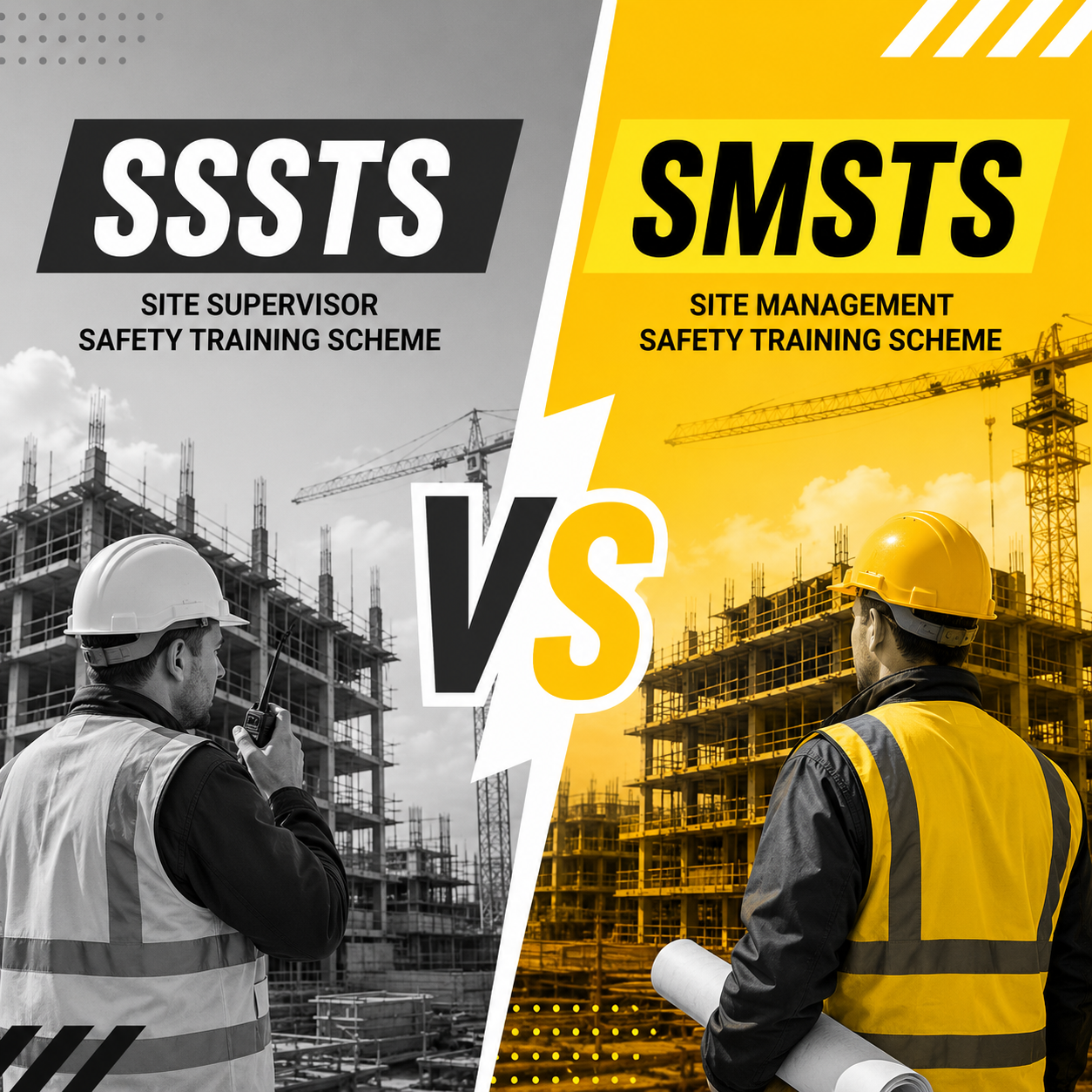
CITB SSSTS
CITB SMSTS
Enrol Lighthouse Safety to carry out site safety inspections and download Toolbox Talks from Lighthouse website
A risk assessment is only effective if it identifies genuine hazards and is communicated properly to the workforce.
Many construction fines stem from inadequate planning, where foreseeable risks were either missed entirely or not controlled appropriately. HSE investigations repeatedly identify failures in risk assessment and safe systems of work.
✔ Review RAMS regularly
✔ Involve site teams in risk assessments
✔ Ensure controls are practical and achievable
✔ Monitor compliance onsite
Relevant Training:
Enrol Lighthouse Safety to complete RAMS and Risk Assessments on your behalf
Ladders, mobile towers and MEWPs are involved in numerous enforcement actions each year.
In many cases, the equipment itself is not the problem — the issue is incorrect use, inadequate inspection or insufficient training. HSE investigations have highlighted failures involving ladders, lifting equipment and access systems where workers were not adequately trained or supervised.
✔ Ensure operators are trained and competent
✔ Carry out pre-use inspections
✔ Select the correct equipment for the task
✔ Follow manufacturer guidance
Relevant Training:
PASMA
IPAF
Ladder Safety Training
Our sister company OMS – Training and Compliance can provide this training
One of the most common themes across HSE prosecutions is a lack of training.
When incidents occur, investigators often discover workers were not provided with adequate instruction, information or supervision to carry out tasks safely. This is particularly common in work at height incidents.
Training not only improves competence but also demonstrates that an employer has taken reasonable steps to protect employees.
✔ Identify training needs across the workforce
✔ Refresh qualifications regularly
✔ Ensure managers understand their responsibilities
✔ Keep training records up to date
The financial penalty itself is often only part of the impact.
Construction businesses can also experience:
Project delays
Increased insurance premiums
Reputational damage
Lost contracts
Recruitment difficulties
Legal costs
In the most serious cases, directors may face personal prosecution and workers may suffer life-changing injuries or fatalities.
Most HSE prosecutions have one thing in common: they were preventable.
Effective training, competent supervision, robust risk assessments and a strong safety culture can dramatically reduce the likelihood of incidents and enforcement action.
At Lighthouse Safety, we help construction companies develop safer, more compliant workplaces through accredited training courses including:
NEBOSH General Certificate
NEBOSH Construction Certificate
CITB SMSTS
CITB SSSTS
Investing in training today could help prevent the next accident, prosecution or costly HSE fine tomorrow.
Lighthouse Safety delivers accredited health and safety training from centres in Kent, London and across the UK, as well as live online.
Looking across recent HSE prosecutions, the same themes appear repeatedly:
Poor supervision
Inadequate training
Weak risk assessments
Unsafe work at height
Failure to identify hazards before work starts
The good news is that all of these risks can be significantly reduced through effective training and competent management.
At Lighthouse Safety, our NEBOSH, CITB and IOSH courses are designed to help employers, managers and supervisors understand their responsibilities, improve compliance and create safer workplaces before an incident occurs. We can also provide our own expertise with our team of compliance experts. We can carry out site inspections, produce documentation etc, you name it, we can assist!
Because investing in training and correct practises is always cheaper than paying an HSE fine.
Contact our team today to discuss your training requirements and build a safer, more compliant workforce.
Tel: 01634 260631
Email: [email protected]




Accreditations & Certifications



Membership