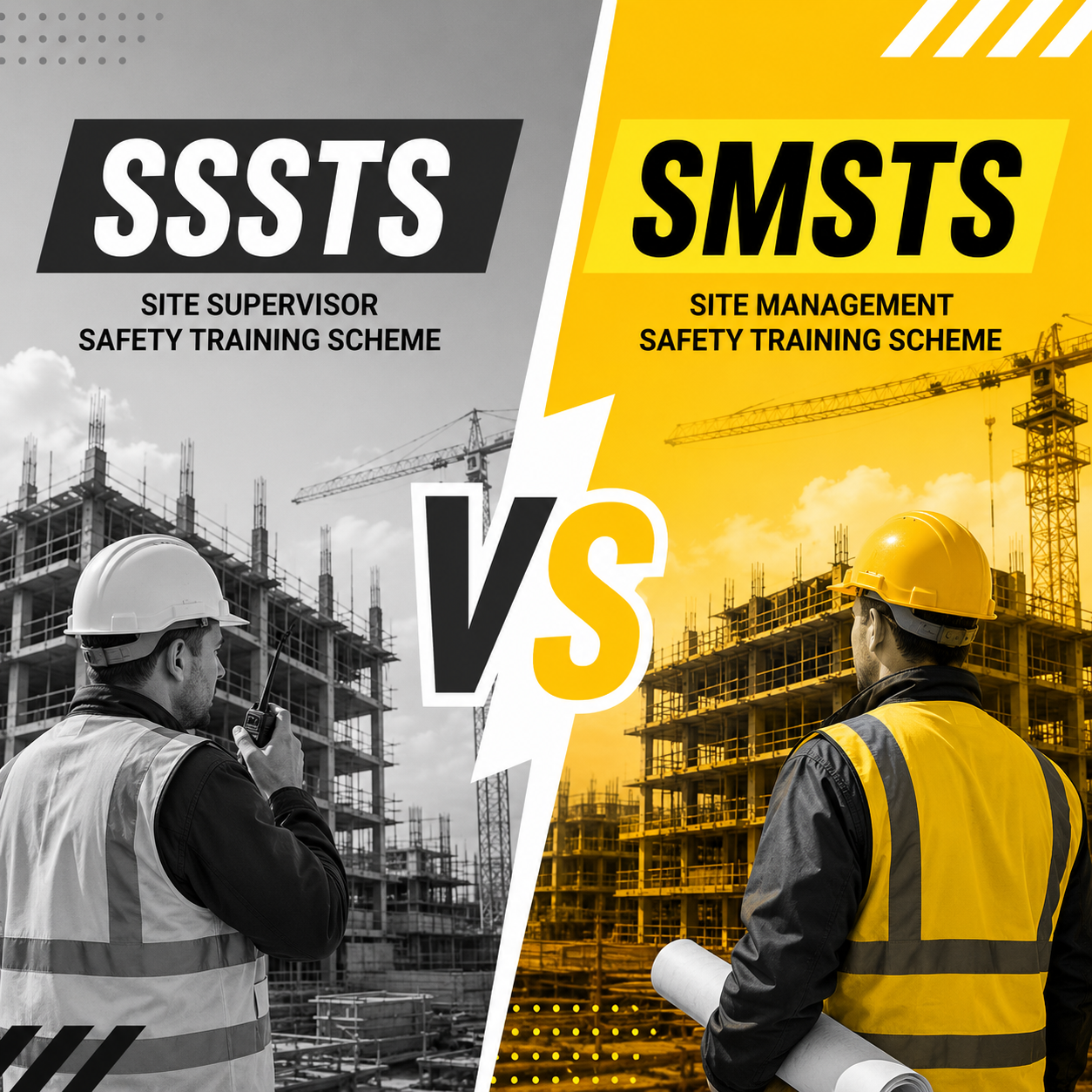
Do I Need SMSTS or SSSTS? A Simple Guide for Construction Professionals
Confused About Whether You Need an SMSTS or SSSTS Course?
If you’re searching for “Do I need SMSTS or SSSTS?”, you’re not alone.
It’s one of the most common questions asked by construction professionals, employers and those looking to progress their careers.
While both qualifications are part of the CITB Site Safety Plus Scheme, they are designed for different roles and levels of responsibility.
This guide explains the key differences between SMSTS and SSSTS, who should attend each course, whether you need a refresher, and how choosing the right qualification can help you stay compliant and advance your career.
Quick Answer: SMSTS vs SSSTS
If you’re:
Managing construction sites or responsible for overall site safety → SMSTS
Supervising workers or subcontractors on site → SSSTS
The course has been designed for individuals responsible for planning, organising, monitoring and controlling construction work.
SMSTS is suitable for:
Site Managers
Project Managers
Contracts Managers
Construction Managers
Principal Contractors
Business Owners
Senior Supervisors progressing into management
The course provides delegates with the knowledge needed to meet legal responsibilities and effectively manage health, safety, welfare and environmental issues on construction projects.
What Does the SMSTS Course Cover?
Topics include:
Health & Safety at Work Act
Construction (Design and Management) Regulations
Risk Assessments
Method Statements
Working at Height
Excavations
Temporary Works
Fire Safety
Occupational Health
Environmental Management
Behavioural Safety
Leadership and Communication
Accident Prevention
The emphasis is on understanding how to manage site safety rather than simply following procedures.
It focuses on the responsibilities of supervising construction work safely on a day-to-day basis.
SSSTS is ideal for:
Site Supervisors
Working Forepersons
Team Leaders
Chargehands
Gangers
Anyone supervising construction operatives
It gives supervisors the confidence to identify hazards, communicate effectively and ensure work is carried out safely.
What Does the SSSTS Course Cover?
Delegates learn about:
Legal responsibilities
Risk assessments
Toolbox talks
Method statements
Behavioural safety
Working at height
Manual handling
Fire prevention
Environmental awareness
Occupational health
The course is practical and focuses on real construction site situations.
Which Qualification Do I Need?
Choose SMSTS if:
✔ You’re responsible for managing construction projects.
✔ You oversee multiple trades or subcontractors.
✔ You’re responsible for site safety.
✔ You want to progress into site management.
Choose SSSTS if:
✔ You supervise workers.
✔ You’re a foreperson or team leader.
✔ You monitor work on site.
✔ You’re stepping into your first supervisory role.
Can I Go Straight to SMSTS?
Yes.
You do not need to complete SSSTS before taking SMSTS.
Many site managers complete SMSTS without ever holding an SSSTS qualification.
Likewise, many supervisors complete SSSTS and remain at that level throughout their careers.
The right course depends on your current role—not which course comes first.
How Long Are SMSTS and SSSTS Valid?
Both qualifications remain valid for five years.
Before they expire, delegates should complete the appropriate refresher course.
SMSTS Refresher – 2 days
SSSTS Refresher – 1 day
If your qualification expires, you may need to complete the full course again.
Completing your refresher before expiry saves both time and money.
Can I Complete SMSTS or SSSTS Online?
Yes.
Lighthouse Safety offers both classroom and live online CITB-approved courses.
Our virtual courses are delivered live by experienced tutors, allowing delegates to participate from home or the workplace while receiving the same nationally recognised qualification.
Why Choose Lighthouse Safety?
Choosing the right training provider is just as important as choosing the right qualification.
At Lighthouse Safety, we have helped thousands of construction professionals achieve nationally recognised CITB qualifications.
When you train with us, you’ll benefit from:
CITB Approved Training Organisation
Experienced construction tutors
Interactive classroom and online delivery
Modern training facilities
Excellent learner support
Small class sizes
High customer satisfaction
Flexible course dates throughout the year
Whether you’re taking your first supervisory role or progressing into site management, our tutors combine practical industry experience with engaging, real-world learning.
Frequently Asked Questions
Is SMSTS higher than SSSTS?
Yes.
SMSTS is designed for construction site managers and covers a broader range of management responsibilities than SSSTS.
Do I need SSSTS before SMSTS?
No.
You can enrol directly onto an SMSTS course if it is appropriate for your role.
Which course is better?
Neither course is “better.”
They are designed for different responsibilities.
Choose the qualification that matches your current or future job role.
Can I complete a refresher if my certificate has expired?
Usually, no.
If your certificate has expired, you may need to complete the full course again.
Are SMSTS and SSSTS recognised nationwide?
Yes.
Both are nationally recognised CITB Site Safety Plus qualifications accepted throughout the UK construction industry.
Ready to Book?
Whether you’re supervising a team or managing an entire construction project, Lighthouse Safety has a course to suit your role.
I did have very nice IOSH training in Lighthouse, very nice exspiriance, the trainer help us to all fill welcom. Even H&S is not my strongest point. I did fill it in on the right place and manage to learn alot during this 3 days.
Attended the IOSH managing safely course which was a little daunting before starting but Lee Whall the tutor made me feel at ease very quickly and answered and job specific questions that I myself and others in the group threw at him. Would definitely recommend.
My second time here, and once again found them very informative, Lee our instructor was very witty know how to stop boredom setting in. He taught the class well and give everyone within the class time and let everyone interact and share there experiences.